All Categories
Featured

The Role of Sustainable Finance in British Corporate Growth
Table of Contents
The vacancy-to-unemployment ratio supplies a useful lens here (figure B). While the labour market has actually cooled considerably from the exceptional tightness of 2021-22, jobs have actually more just recently stabilised even as unemployment has actually continued to edge up. This pattern recommends that the change in the labour market is increasingly occurring through slower hiring and weaker task matching.
While our central projection does not assume such a shift, this is an essential threat that we are keeping an eye on carefully. Proof from business surveys suggests AI is presently being used primarily to enhance specific jobs especially in administrative, analytical and customer-facing functions rather than to drive massive workforce reductions. Reported efficiency gains have actually up until now been concentrated in narrow functions, with limited immediate influence on overall work.
For the Monetary Policy Committee, the crucial judgement is how rapidly rising joblessness translates into lower wage development and services inflation. While we expect Bank Rate to fall to 3.25 percent by year-end, persistent wage pressures provide a danger to this view. For the public financial resources, slower work growth and weaker incomes dynamics would reduce income tax and National Insurance coverage invoices.
The UK economy will grow more slowly next year than any other major sophisticated country as taxes and high rates of interest take their toll, according to the current projections from the OECD. In a gloomy outlook, the Organisation for Economic Co-operation and Development devalued its forecast for UK growth from 0.7 per cent to 0.4 per cent, the most affordable in the G7 apart from Germany.
In 2025, it projects that the UK will grow by 1 per cent the weakest performance in the G7. By contrast, the US economy is forecasted to power ahead this year with 2.6 percent growth, followed by Canada at 1 percent, and Italy and France at 0.7 percent.
Navigating Mid-Market Funding Trends Within the UK
German financial growth is anticipated to increase from 0.2 percent this year to 1.1 percent next year, which will see it leapfrog Britain. The OECD outlook is more downhearted than that provided by the International Monetary Fund (IMF) previously this year, which anticipate UK development of 1.5 percent.
Interest rates required to remain high in order to deal with sticky inflation, it stated. "The fiscal and financial policy mix is properly limiting and must stay so till inflation returns durably to target (2%)," the OECD's UK financial outlook for 2024 discovered.
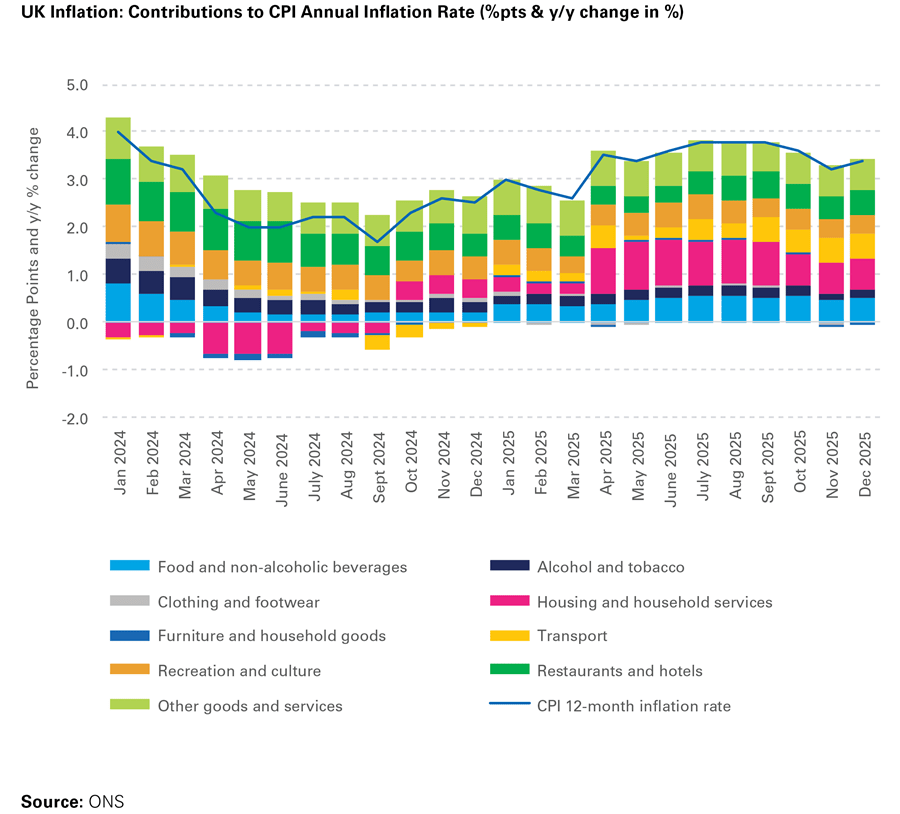
Will Mid-Market Capital Markets Rise By 2026?The OECD anticipates eurozone inflation currently 2.4 per cent will be substantially lower than UK inflation currently 3.2 percent over the exact same duration. The think tank said "financial prudence" is needed until the Bank of England's inflation target of 2 per cent is met, which government costs should be directed towards "supply-enhancing investment" such as the NHS.
Scaling International Market Operations Through UK Governance
The joblessness rate increased to 4.2 percent for the most current three-month period to February. The OECD forecasts this will continue to increase, reaching as high as 4.7 percent in 2025 "as the labour market cools". Chancellor Jeremy Hunt said the OECD forecast was unsurprising offered "our priority for the in 2015 has actually been to take on inflation with greater rates of interest.

Get latest updates and insights provided to your inbox.
[LONDON] The International Monetary Fund raised its growth forecast for Britain's economy this year on Monday (May 18) but alerted that additional "domestic uncertainty", at a time when political instability is engulfing the federal government, could hit costs and investment. In an upgrade that finance minister Rachel Reeves hailed as an indication of progress by embattled Prime Minister Keir Starmer's government, the IMF said Britain's economy would grow by 1.0 percent this year.
It would still represent a downturn for Britain from 2025." While the UK economy has remained resilient in recent years, the war in the Middle East is moistening near-term potential customers," the IMF said in its annual assessment of Britain's economy. The brand-new, higher projection for 2026 was due to pre-war financial momentum which was shown in current stronger-than-expected growth and revisions to previous information, the Fund said.
How Digital Innovation Redefines Operations for 2026
However, provided the unpredictability about the Iran conflict, the BOE might need to cut or raise rates and should "be prepared to respond powerfully" if second-round effects such as employee demands for higher pay or companies raising their market price showed stronger than expected. Over the previous two weeks, British politics has actually been rocked by speculation about Starmer's future, driving benchmark 10-year borrowing costs to their highest considering that 2008 on Friday on the possibility of weaker financial discipline.

Latest Posts
Leveraging AI Transformation for Rapid British Growth
Benefits of Resilient Supply Chains for British Firms
Why British Firms Must Prioritize ESG Strategies